

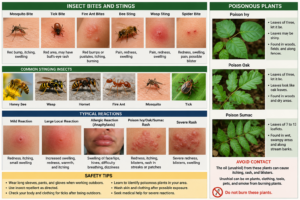
Safety Talk: Outdoor & Seasonal Hazards – Insect Bites, Stings, and Poisonous Plants
During July, employees who work outdoors face increased exposure to environmental hazards that can lead to illness, injury, or lost work time. Awareness and prevention are key to staying safe. Outdoor work during the summer increases the risk of exposure to insects and poisonous plants. These hazards can cause anything from minor irritation to serious medical emergencies. Knowing how to identify these hazards and respond appropriately can help prevent injuries and lost work time.
Insect Bites and Stings
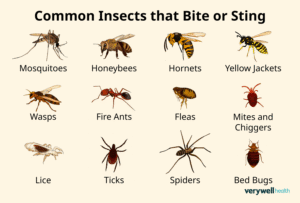
Common insects found around jobsites include:
- Bees
- Wasps and hornets
- Fire ants
- Mosquitoes
- Ticks
- Spiders (depending on the area)
Why They’re Dangerous
Insect bites and stings can cause:
- Pain and swelling
- Itching and skin irritation
- Infection from scratching
- Allergic reactions (anaphylaxis)
- Diseases transmitted by mosquitoes and ticks
Prevention Tips
Before Work
- Inspect the work area for insect nests, hives, ant mounds, and standing water.
- Review the jobsite for known insect hazards.
- Tell your supervisor if you have a severe allergy to insect stings.
During Work
- Wear long sleeves and pants when practical.
- Wear gloves when handling brush, wood, or debris.
- Use insect repellent according to the manufacturer’s instructions.
- Avoid wearing heavily scented lotions or perfumes.
- Keep food and drinks covered to avoid attracting bees and wasps.
- Stay alert when working around trees, brush, equipment, or trash containers.
Tick Safety
Ticks can attach to clothing or skin without being noticed.
Reduce Your Risk
- Stay out of tall grass and dense brush whenever possible.
- Tuck pant legs into boots or socks when working in vegetation.
- Perform a full-body tick check after outdoor work.
- Check clothing, tools, and equipment before leaving the jobsite.
If You Find a Tick
- Remove it promptly with fine-tipped tweezers.
- Pull straight upward without twisting.
- Clean the bite area with soap and water.
- Monitor for rash, fever, or flu-like symptoms.
- Report concerns to your supervisor and seek medical advice if symptoms develop.
Bee and Wasp Stings
Most Reactions
- Immediate pain
- Redness
- Mild swelling
Serious Allergic Reactions (Medical Emergency)
Watch for:
- Difficulty breathing
- Swelling of the lips, tongue, or throat
- Widespread hives
- Dizziness or fainting
Call 911 immediately. If the person has been prescribed an epinephrine auto-injector, help them use it if they are unable to do so themselves.
Poisonous Plants
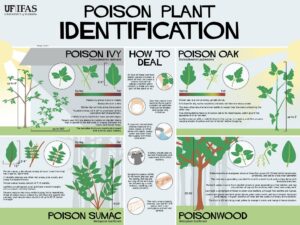
Workers may encounter poisonous plants while mowing, clearing brush, excavating, or working near wooded areas.
Common examples include:
- Poison ivy
- Poison oak
- Poison sumac
Remember
“Leaves of three, let it be.”
Poison ivy and poison oak typically have clusters of three leaflets, although their appearance can vary by season and region.
How Exposure Occurs
The oily resin (urushiol) found on these plants can be transferred by:
- Direct skin contact
- Clothing
- Gloves
- Tools
- Equipment
- Pet fur
- Smoke from burning poisonous plants
Important: Never burn poison ivy, poison oak, or poison sumac. Inhaling the smoke can cause severe irritation to the lungs and airways.
Prevention
- Learn to recognize poisonous plants in your work area.
- Wear long sleeves, long pants, gloves, and boots when working in vegetation.
- Stay on cleared paths whenever possible.
- Wash hands before eating, drinking, or touching your face.
- Clean tools and equipment after working in brush.
- Wash work clothing separately from other laundry if exposure is suspected.
Signs of Exposure
Symptoms usually appear within 12 to 48 hours and may include:
- Redness
- Intense itching
- Swelling
- Blisters
- Rash in streaks or patches
First Aid
If exposure is suspected:
- Wash the skin immediately with soap and cool water.
- Remove contaminated clothing.
- Clean tools and gloves.
- Avoid scratching to reduce the risk of infection.
- Seek medical attention if the rash is severe, affects the face or eyes, or covers a large area of the body.
Supervisor Discussion Questions
- Have you seen bee nests, wasp nests, or fire ant mounds on this jobsite?
- Does everyone know where insect repellent and first aid supplies are located?
- Can everyone identify poison ivy or other poisonous plants common to this area?
- Does anyone have a known allergy to insect stings that may require emergency response?
Key Takeaways
- Inspect the work area before starting the job.
- Wear appropriate PPE when working outdoors.
- Use insect repellent and avoid disturbing insect nests.
- Learn to identify poisonous plants and avoid contact.
- Wash exposed skin, clothing, and equipment after working in brush.
- Report nests, hazardous plants, bites, stings, and allergic reactions immediately.
- Seek emergency medical care for signs of anaphylaxis or other severe reactions.
Safety Message: The best defense against outdoor hazards is awareness. Taking a few extra minutes to identify insects and poisonous plants before starting work can prevent painful injuries and potentially life-threatening emergencies.